HR decodes pretty readily to high-resolution. In this series that ranges from 16 MP through 105 MP. There are a range of interfaces available. And many shared features such as advanced image correction: lens shading, defect pixel correction, and low-noise image acquisition.
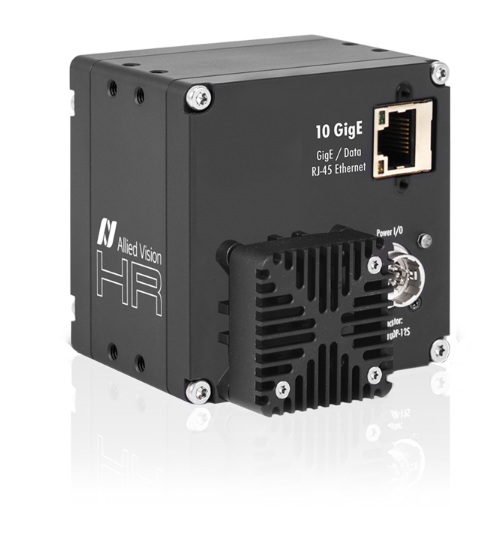
It’s NOT the point of this short article to cover the entire HR series.
Our focus is on two particular features available on certain members of the HR series, each of which brings something special.
HR RF Mount models feature a native Canon RF mount, enabling the use of Canon RF lenses for large-format imaging applications requiring high-performance optics and a wide range of focal lengths.
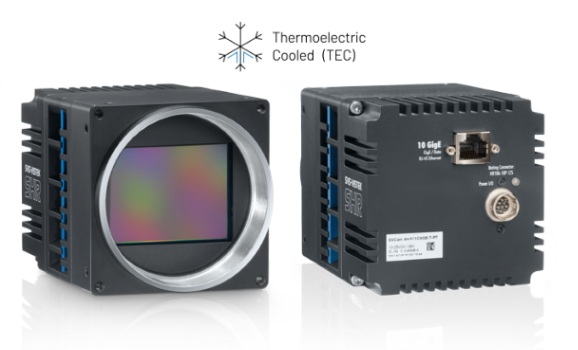
HR T (TEC) models feature thermoelectric cooling and heating (TEC) to regulate sensor temperature. Maintaining a stable sensor temperature helps reduce dark current, thermal noise, and sensor drift while improving image consistency for long exposure, scientific imaging, and precision inspection applications.
HR RF mount characteristics
The RF mount introduced optical, electronic, and economic benefits.
Optics: Per Canon, “RF lenses can be constructed with larger diameter, rear-positioned elements. This type of design helps reduce the bending of light rays as they pass through the lens, which reduces aberrations and improves overall image quality. It is now possible to have larger apertures for a given focal length and achieve corner-to-corner sharpness with minimal light fall-off.”
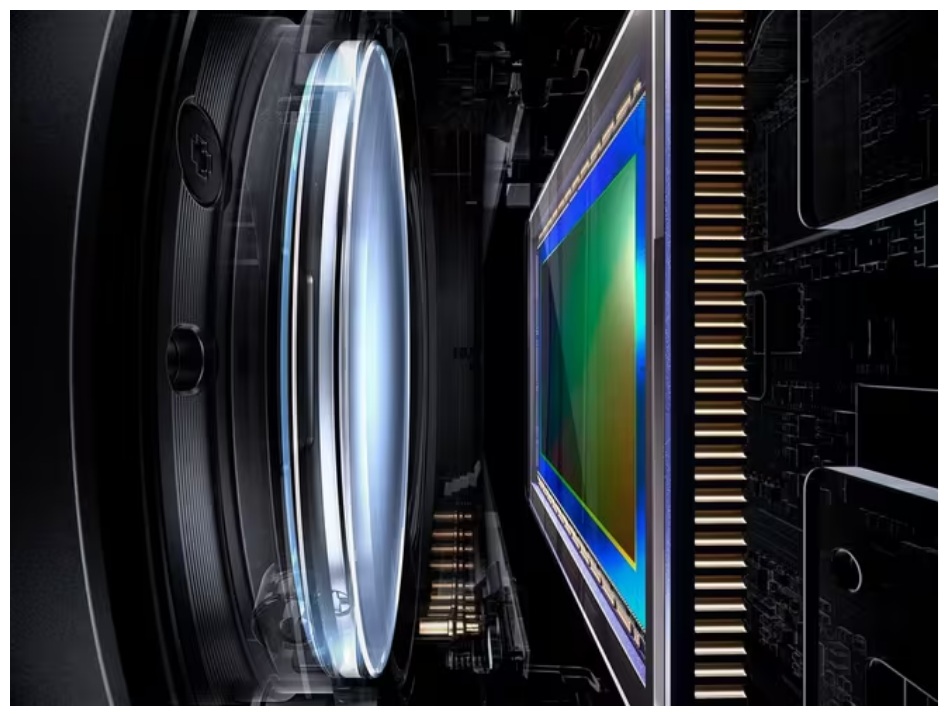
Electronics: The RF mount has a 12-pin connection between the camera and lens. This enables much fast communication between lens and camera, and with bandwidth for data transfer. Software may control a variety of settings such as shutter speed, aperture, exposure compensation.
Another benefit is in-camera correction of optical aberrations and real-time Digital Lens Optimisation (DLO). DLO data is stored within RF lenses and can be read automatically.
Economics: Because the mount covers a wide range of focal lengths, but with a short 20 mm flange distance, the lenses may be made more compact and lightweight. This reduces materials and production costs, a benefit that can be passed to the buyer.
HR T TEC model characteristics
Thermoelectric cooling (TEC) uses the Peltier-Seebeck effect to transport the heat from the main board of the camera to the housing, thereby cooling the mainboard and improving efficiency of the camera sensors by reducing dark current. When the mainboard heats up during operation, a difference in voltage will build up between the housing and the mainboard.
As a result, the mainboard is cooled whereas the housing gets warmer. The housing then dissipates the heat to the surroundings.
The settings for the Device Temperature Selector can be used to monitor the hardware temperature of the main board, the power supply, the FPGA, and the sensor during operation.
The advanced housing design, equipped with integrated ventilation, facilitates a temperature differential of up to 15°C between the camera housing and the sensor. This is the basis for optimal sensor temperature conditions.

1st Vision’s sales engineers have over 100 years of combined experience to assist in your camera and components selection. With a large portfolio of cameras, lenses, cables, NIC cards and industrial computers, we can provide a full vision solution!
About you: We want to hear from you! We’ve built our brand on our know-how and like to educate the marketplace on imaging technology topics… What would you like to hear about?… Drop a line to info@1stvision.com with what topics you’d like to know more about.
#AlliedVision
#HRhighresolution
#CanonRFmount
#TEC