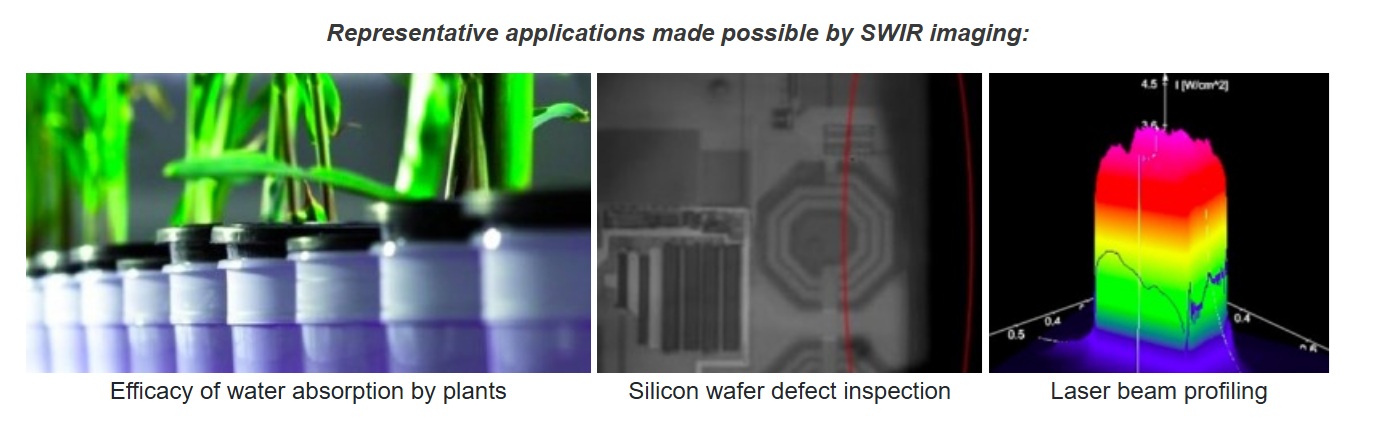
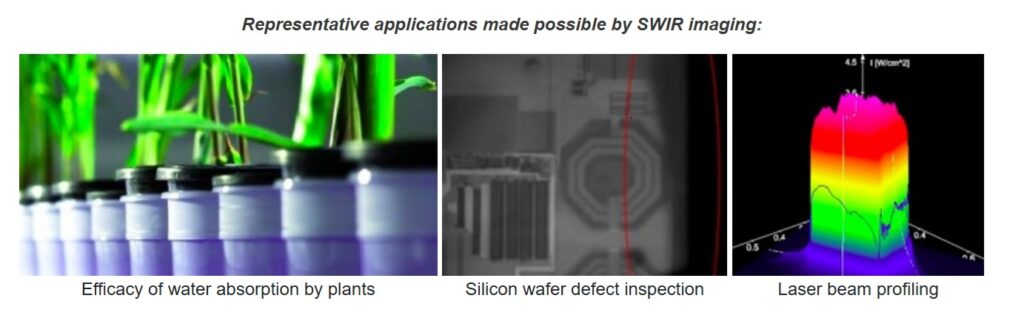
Most machine vision systems begin with visible-light cameras, but many inspection challenges remain unsolved because the information being sought simply isn’t visible in the VIS spectrum.
Many are intimidated by SWIR, worried it’s some exotic sensing technology. While it’s different in that it’s a form of vision that’s in a different part of the spectrum than VIS, we all enjoy radio and bluetooth, and we’re not natively equipped to sense those parts of the spectrum either!
Below we present SWIR as a practical problem-solving technology. And we’ve created a new area on the 1stVision website dedicated to SWIR imaging.
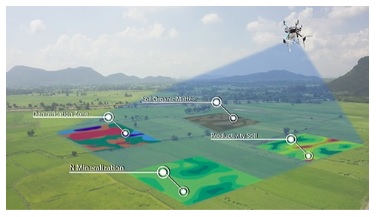
Sign #1: You Need to Detect Moisture or Water Content
Applications:
- Fruit and vegetable inspection
- Agricultural monitoring
- Crop stress analysis
- Food quality grading
- Moisture detection

Key takeaway: Water absorbs SWIR wavelengths, creating contrast that visible-light systems often cannot provide.
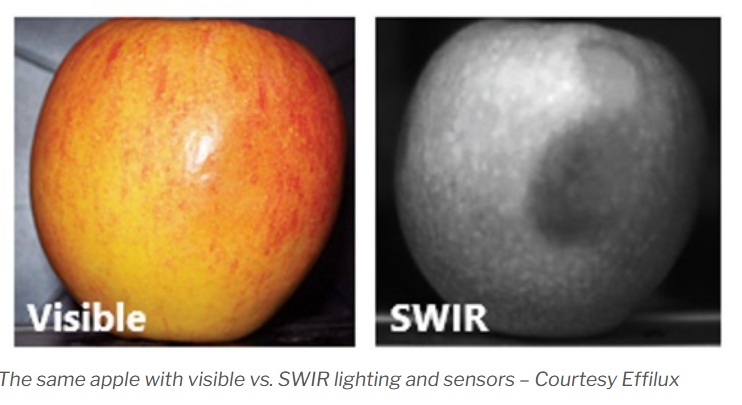
The economic payoff for fruit sorting with SWIR is to detect early bruising. That way bruised fruit isn’t shipped for display and customer rejection and poor quality – instead lightly bruised fruit can still be quickly sauced or juiced, while heavily bruised fruit may be rejected early to reduce shipping costs and preserve reputation for quality.
Sign #2: Different Materials Look the Same in Visible Light
Applications:
- Plastic sorting
- Recycling systems
- Material identification
- Foreign material detection
- Food processing
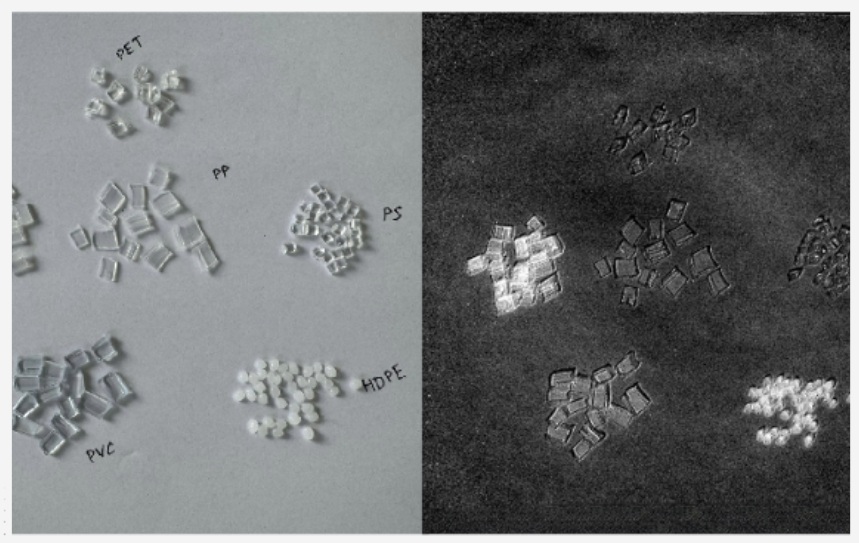
Key takeaway: Materials that appear identical in visible light often separate very clearly in SWIR.
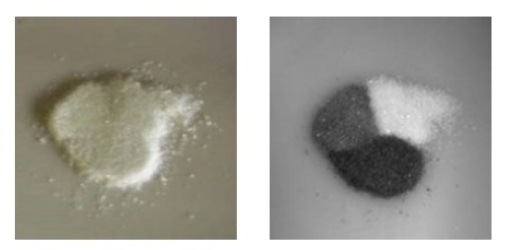
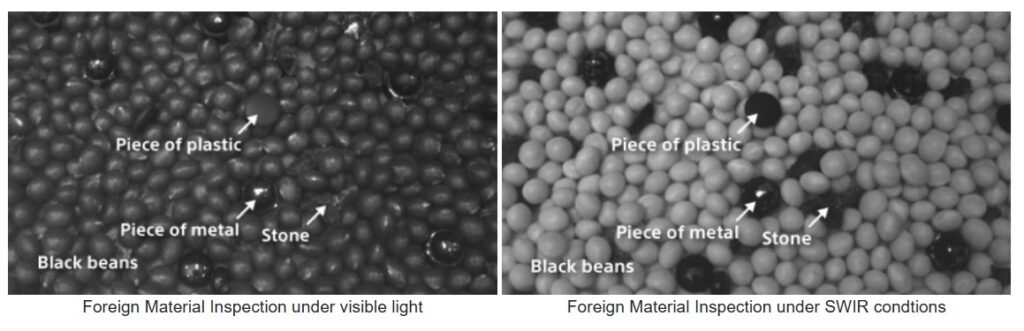
Consider recycling and automated sorting applications: If the materials aren’t visible to humans, then neither humans nor VIS spectrum machine vision are candidates. But SWIR applications can distinguish among different types of plastic, for example, making recycling profitable or at least less costly. Also relevant for food safety applications.
Sign #3: You Need to See Through Silicon
Applications:
- Semiconductor inspection
- Wafer inspection
- Die inspection
- Solar manufacturing
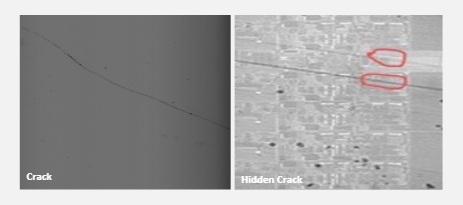
Key takeaway: Silicon becomes transparent at SWIR wavelengths, allowing inspection of features hidden from visible cameras.
Economics: Semiconductor and solar panel production is an expensive undertaking, and it’s essential to detect any flaws as early as possible, to reject any materials that aren’t worthy of further processing. Improving yields reduces costs and raises quality, providing competitive advantage.
Sign #4: You Need to Inspect Through Plastic Packaging
- Pharmaceutical packaging
- Medical devices
- Bottle inspection
- Seal inspection
- Fill-level verification
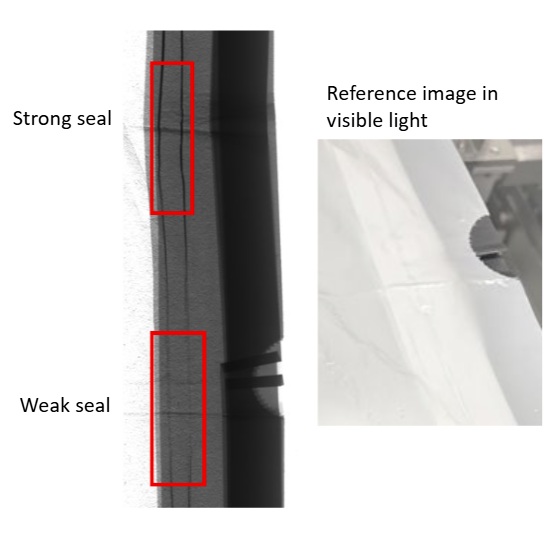
Key takeaway: SWIR can provide visibility through packaging materials that are difficult to inspect using conventional imaging.
Especially many plastics are opaque in VIS yet transparent in SWIR. The benefits are clear – pun initially not intended but in hindsight it works.
Sign #5: Glare, Dust, Smoke, or Haze Is Limiting Performance
Applications:
- Outdoor inspection
- Transportation systems
- Industrial process monitoring
- Harsh manufacturing environments
Key takeaway: SWIR wavelengths can often provide improved contrast and image quality in challenging environments.
How SWIR Technology Has Changed in the Last Five Years
Many engineers who looked at SWIR way back before 2020 may think of it as expensive and niche. Back then that was a fair characterization. It was still cost-effective in defined niches when the ROI made sense, but it’s fair to say it was niche.
But automatic transmission cars were once niche. As were smartphones. And streaming video. Technologies evolve.
Recent SWIR developments – two in particular:
One: Sony SenSWIR
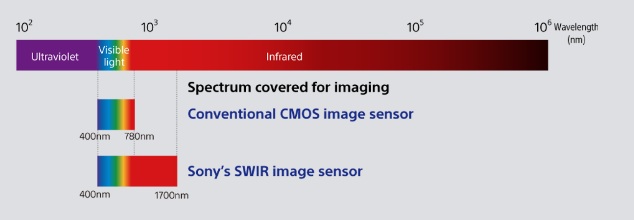
Commercialized in just the past few years, Sony’s SenSWIR IMX992 and IMX 993 sensors continue to use InGaAs. But with innovative bonding technologies Sony has improved quantum efficiency, permitting dense pixels, smaller sensors, and the avoidance of cooling.
That’s enabled small-format cost-effective cameras such as Allied Vision’s Alvium SWIR models. Note that SenSWIR isn’t “just” SWIR (many previous SWIR cameras could only work in the SWIR portion of the spectrum), but VIS+SWIR:
- Higher resolutions
- Smaller pixels
- Faster frame rates
- More compact camera designs
- Easier machine vision integration
Two: Nextgen Quantum Dot SWIR Sensors
Allied Vision and QDI Systems recently announced a partnership to utilize Quantum Dot (QD) sensors. “The collaboration aims to accelerate the transition from traditional InGaAs-based SWIR sensors to a new class of QD sensors, delivering comparable performance while significantly improving cost, size, and weight characteristics. This breakthrough is expected to unlock new opportunities, particularly in industrial applications and drone-based imaging systems.”
What are quantum dots?
Per QDI Systems, quantum dots (QDs) are “tiny solution-processable semiconductor nanoparticles with extraordinary properties. […] At their tiny scale, quantum dots exhibit unique quantum properties, which distinguish them from larger particles. One of the most notable features of quantum dots is their size-dependent optoelectronic properties. This means that their ability to absorb and emit light can be precisely tuned by changing their size or composition.”
We’re just on the cusp of commercialized camera offerings utilizing QDs, but it’s apparent there may soon be choices beyond traditional InGaAs-only soluntion.
And that will further reduce the cost, size, and weight of SWIR cameras.
“Is SWIR Approaching Its CMOS Moment?”
Machine vision practitioners in the VIS space for more than a few years will recall that CCD sensors were dominant until 2007-ish and CCD still had significant market share for some years after that.
We submit that newer technologies like Sony SenSWIR and Quantum Dot SWIR sensors could, or really will, move SWIR from a niche technology into a mainstream machine vision tool
Choosing the Right SWIR Camera
If you are considering SWIR, we suggest you keep the following in mind. Or call us at 978-474-0044, and we’ll walk you through key choices based on your applications goals.
- Area Scan vs. Line Scan
- InGaAs vs. Sony SenSWIR vs. emerging Quantum Dot technologies
- GigE, USB3, 5GigE, CoaXPress, Camera Link, and CSI-2 interfaces
- Importance of selecting the proper camera, lens, lighting, and filters as a complete system
Or click the link for all SWIR cameras on offer at 1stVision.
Conclusion:
Stop asking, “Do I really need a SWIR camera?”
Start asking, “Is my visible-light camera hiding information that SWIR could reveal?”
Especially if you are into any of the following applications:
- Moisture detection
- Material discrimination
- Plastic sorting
- Recycling
- Semiconductor inspection
- Packaging verification
- Food inspection

1st Vision’s sales engineers have over 100 years of combined experience to assist in your camera and components selection. With a large portfolio of cameras, lenses, cables, NIC cards and industrial computers, we can provide a full vision solution!
About you: We want to hear from you! We’ve built our brand on our know-how and like to educate the marketplace on imaging technology topics… What would you like to hear about?… Drop a line to info@1stvision.com with what topics you’d like to know more about.
#SWIR