A SWIR camera can reveal features, materials, and defects that are invisible to a conventional machine vision camera. But the camera is only part of the equation. To get useful contrast, you need to illuminate the target at the right SWIR wavelength and with the right lighting geometry.
That’s where SWIR lighting becomes critical. The right combination of camera, wavelength, and illumination can make an otherwise difficult inspection surprisingly easy.
SWIR is enjoying its CMOS moment
Just as CMOS sensors flirted with CCD and suddenly took on huge market share, early SWIR imaging was seen as rather specialized and confined to niche applications. That’s changing rapidly.
We’ve written about this in a recent blog. And developed a SWIR overview and products section on our website.
Feature identification requires contrast
Whether in VIS or SWIR, maximizing contrast is essential. Besides choosing a good sensor that’s suited to the resolution requirements and light reflecting/emitting characteristics of the target object(s), a key factor to control is lighting.
Ambient light might be sufficient for some applications, but for many it’s either necessary or a clear value-add to provide lighting that really makes the contrast “pop”.
Exploit different materials’ absorption/reflection characteristics
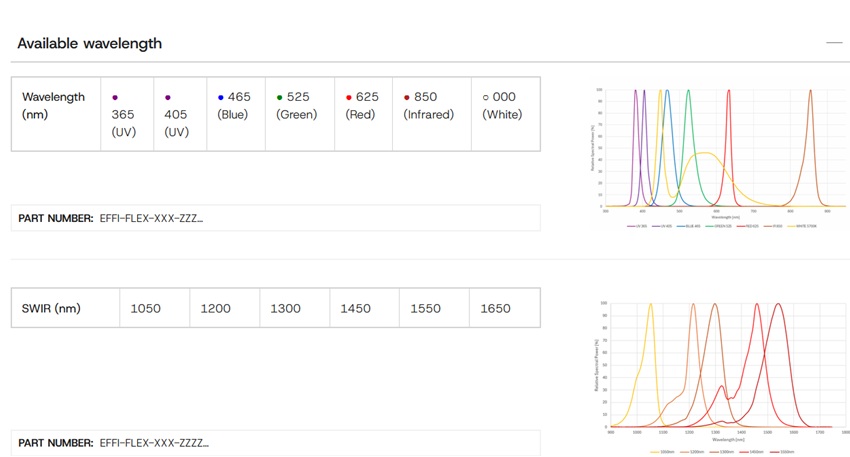
Materials that are purely or mostly of a certain composition reflect or absorb specific frequencies of light. We can exploit that by matching lighting frequency, sensor, and sometimes “bandpass” or “band-blocking” filters to look for (or exclude) materials. Let’s call it wavelength optimization.
Below see a screenshot from lighting manufacturer EffiLux, showing a variety of wavelength-specific LED light frequencies:
Application examples

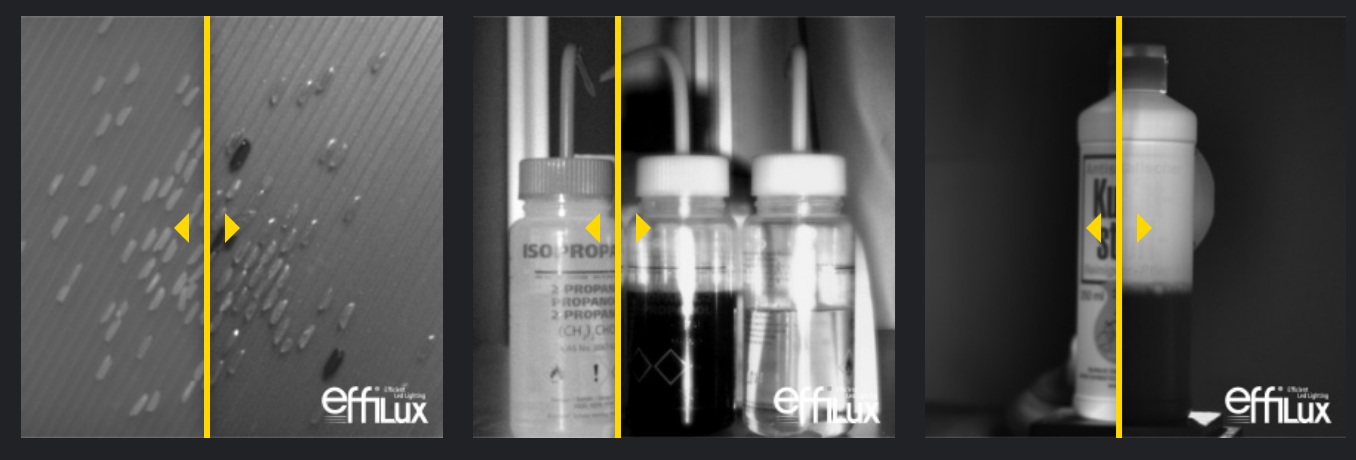
In this food sorting example foreign objects readily appear in contrast to the grains of rice – when using SWIR imaging and good SWIR lighting. Courtesy EffiLux
Verify fill levels in containers opaque to VIS – as SWIR can see through plastic, while water-based solutions appear black in SWIR wavelengths. Courtesy EffiLux.

Note: Per the wavelength optimization notes above, water is known to absorb at 1450 nm. Lots of fluids are water-based, so such fluids appear black to an NIR sensor because nothing is reflected back when exposed to 1450 nm light.
Other fluids have different absorption / reflection characteristics. One can look it up, and design a system according to what you want to detect as present or absent.
Different LED lights according to application requirements
- EFFI-RING ring lights with modular LED swap-options
- EFFI-SHARP pattern projection lights
- EFFI-FLEX bar lights
- EFFI-MBL back lights
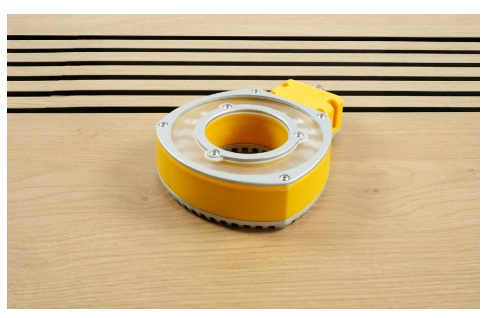
EFFI-RING
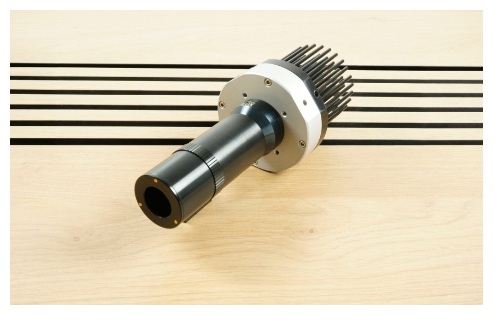
EFFI-SHARP-V2
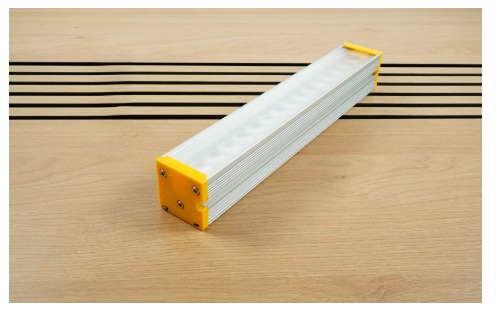
EFFI-FLEX
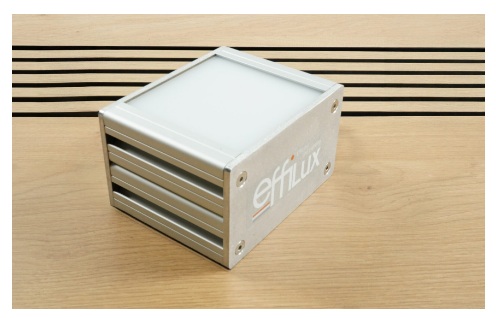
EFFI-MBL

1st Vision’s sales engineers have over 100 years of combined experience to assist in your camera and components selection. With a large portfolio of cameras, lenses, cables, NIC cards and industrial computers, we can provide a full vision solution!
About you: We want to hear from you! We’ve built our brand on our know-how and like to educate the marketplace on imaging technology topics… What would you like to hear about?… Drop a line to info@1stvision.com with what topics you’d like to know more about.
#SWIR
#SWIRlighting