In 2025 we released a blog and a revised TechBrief on machine vision camera interfaces. Things continue to evolve, as 25 GigE and 100 GigE cameras are now available. So here we call out those new entries to our updated TechBrief Camera Interfaces Explained, available for free download from our Knowledge Base.
Camera interfaces often come to the market as derivative or augmented standards from computer networking. This is certainly the case as ethernet evolved to GigE, 5 GigE, 10 GigE, and now 25 and 100 GigE, respectively. The networking pioneers tend to be the early adopters, and the cable manufacturers and interface designers develop the gear while the software and firmware leaders refine the protocols.
The global machine vision industry, while valued annually at more than $20 billion USD, benefits by riding the networking coattails, typically a few years behind the networking early adopters. That has the advantage that the protocols have matured and the third-party cables are on the market. So the machine vision standards developers – and the camera adopters inherit all that’s come before.
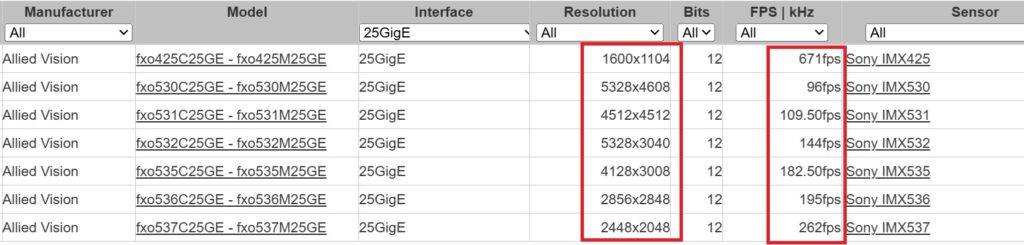
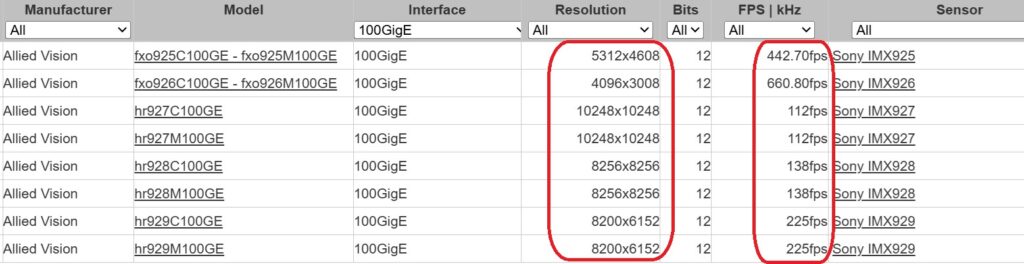
Seeing is believing: Note resolution and FPS columns below
In the 25 GigE and 100 GigE collections below, note both:
- Some large sensors at impressive frame rates – e.g. 105 MP at 112 fps
- Some medium sized sensors at incredible frame rates – e.g. 12 MP at 660 fps
An interface for every application requirement
Whether your application needs only a few frames per second, from a modest sized sensor, with the camera near the PC host – or bandwidth intensive requirements – possibly at significant cable length – there’s likely an interface suited to your needs. Download the updated free TechBrief.
Alternatively, start with camera selection, and let that drive the interface. That method works too, as camera manufacturers typically design-in the interface optimal to move the data volumes off the sensor, for the type of applications they designed the camera for. But sometimes the same sensor is found with two or more interface options – so it’s helpful to be “interface-aware” when selecting among cameras.

1st Vision’s sales engineers have over 100 years of combined experience to assist in your camera and components selection. With a large portfolio of cameras, lenses, cables, NIC cards and industrial computers, we can provide a full vision solution!
About you: We want to hear from you! We’ve built our brand on our know-how and like to educate the marketplace on imaging technology topics… What would you like to hear about?… Drop a line to info@1stvision.com with what topics you’d like to know more about.
#25GigE
#100GigE